
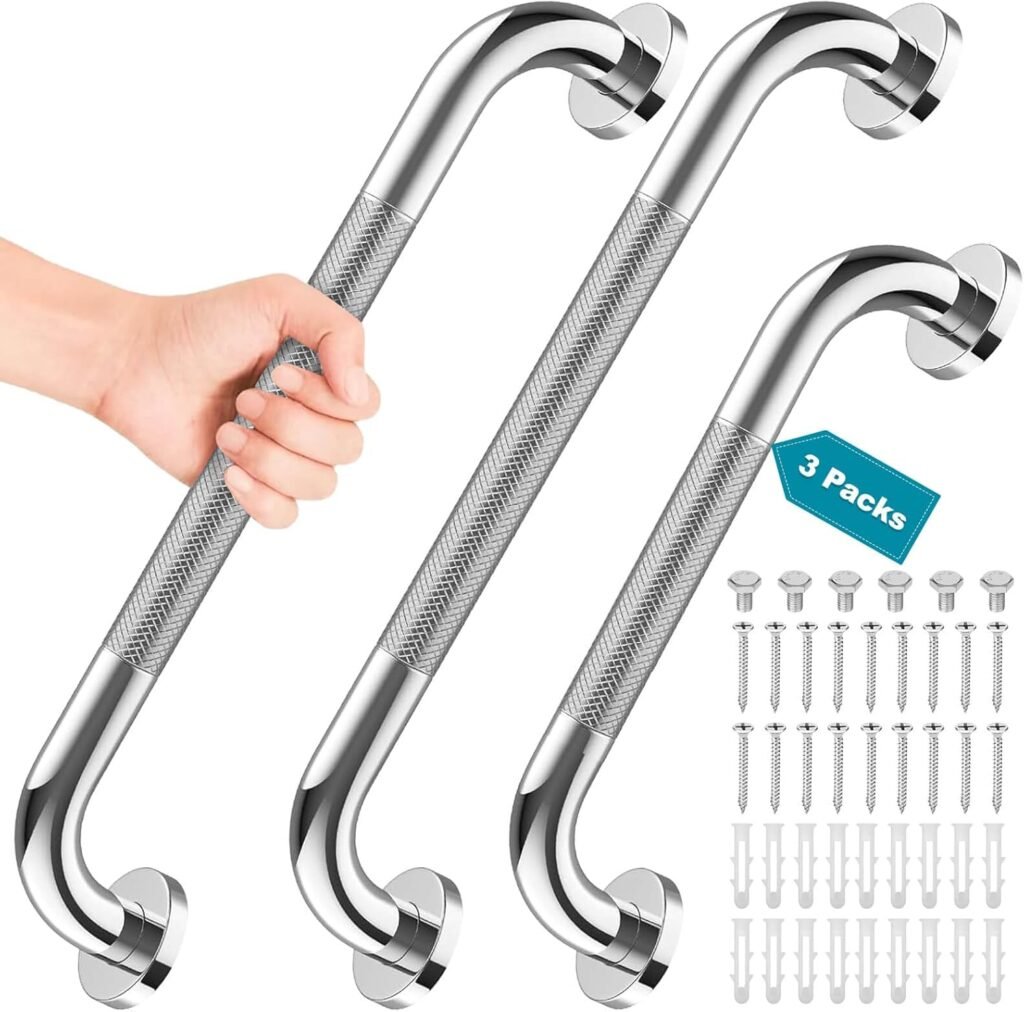
Most falls among older adults don’t happen on stairs or sidewalks — they happen in the bathroom. Wet tile, a slippery tub edge, and nothing sturdy to hold onto make it one of the riskiest rooms in the house. A well-chosen grab bar is one of the cheapest, fastest home modifications you can make to cut that risk, whether you’re outfitting a parent’s bathroom, recovering from surgery, or simply planning ahead.
The tricky part is that not all grab bars are the same. Some mount permanently into wall studs and hold hundreds of pounds; others use suction cups for a no-drill, renter-friendly install but come with real limitations on what surfaces they’ll actually grip. Picking the wrong type for your wall can mean a bar that looks secure but isn’t. Below, we break down what actually matters when buying one, then compare 10 well-reviewed options so you can match the bar to your bathroom and your budget.
What to Look for in a Bathroom Safety Grab Bar
- Mounting type: Permanent bars anchor into wall studs (or wall anchors) with screws and support far more weight — this is the safer choice for anyone who needs to bear real body weight. Suction-cup bars are removable and require no drilling, but they only work reliably on smooth, non-porous, airtight surfaces like glass, tile, or acrylic. They should be treated as balance aids, not full body-weight support.
- Weight capacity: Look for a clearly stated capacity and buy well above the heaviest user’s weight. Stud-mounted steel bars often support 300–500 lbs; suction bars are typically rated lower and are more sensitive to surface condition.
- Material and grip: Stainless steel resists rust and holds up to daily moisture. A knurled or ribbed grip surface matters more than it looks — it’s what keeps a wet hand from sliding.
- Length and shape: Straight bars (12″–36″) suit tub and shower walls; L-shaped or angled bars help with both standing and sitting-to-standing motions near a toilet or bench.
- ADA compliance: If you’re outfitting a bathroom to a formal accessibility standard, look for bars labeled ADA-compliant, which specify diameter, wall clearance, and mounting height.10 Best Grab Bars for Seniors
- Installation: Concealed-screw designs give a cleaner look; exposed hardware is often easier for a first-time DIY install. Suction bars install in seconds but need to be tested on the actual wall before you rely on them.
One buying-guide gap we noticed across other grab bar roundups: most either push suction bars without clearly flagging the weight-support caveat, or list permanent bars without helping you figure out which wall surfaces even accept a suction mount in the first place. We’ve called that out product-by-product
Table of Contents
Top 10 Grab Bars for Seniors and Bathroom Safety
1. TAILI Grab Bars for Bathtubs and Showers, 2 Pack Suction Grab Bar
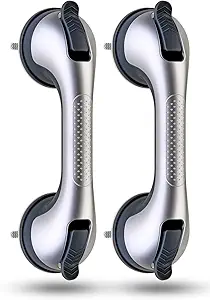
This is TAILI’s flagship suction bar, built for households that want a secure hold without touching a drill. Each bar uses two heavy-duty suction cups paired with locking latches, so once it’s pressed onto the wall and the latches are snapped down, it stays firmly in place until you choose to release it. The top of the handrail has an anti-slip strip that gives wet hands something to grip onto, while the underside is shaped into a curved wave pattern designed to sit comfortably around fingers — a small detail that makes a real difference during longer showers.
TAILI rates each bar to hold up to 240 lbs, and the design is versatile enough to use in the shower, the tub, next to the toilet, or even in the kitchen for anyone who needs a quick handhold getting up from a low seat. It’s also a genuinely popular pick for multi-generational households, since the same bar can help an elderly parent one day and a pregnant family member or a child the next, without needing separate equipment for each person. The company is also fairly responsive if a buyer’s wall doesn’t cooperate — their guidance is to wash the suction cup, dry it, and test it on a smooth glass surface first to confirm the cup itself is functioning before blaming the wall.
Because nothing is drilled or glued, it’s also one of the few grab bar options that fully satisfies renters and anyone in a leased apartment or assisted-living unit where permanent modifications aren’t allowed. The one thing every buyer needs to internalize before purchasing: this only works on airtight, non-porous surfaces. It will not hold on drywall, wallpaper, unfinished marble, or textured tile, no matter how well it’s installed, and skipping that step is the single biggest reason suction bars get returned or reviewed poorly.
Pros
- Locking latch mechanism adds an extra layer of security beyond suction alone
- Anti-slip top strip and curved underside grip improve hand contact when wet
- Waterproof construction holds up to daily shower and bath exposure
- Flexible placement — works in showers, tubs, near toilets, or in the kitchen
Cons
- Will not hold on drywall, wallpaper, painted walls, or unfinished/textured tile
- Not intended to support a user’s full body weight — it’s a balance aid, not a structural handrail
- Suction needs periodic re-checking, since humidity and soap residue can weaken the seal over time
- Locking latches require enough hand strength and dexterity to operate confidently, which can be a barrier for users with severe grip limitations
2. TAILI Shower Grab Bar, 2 Pack 12 Inch Suction Grab Bars
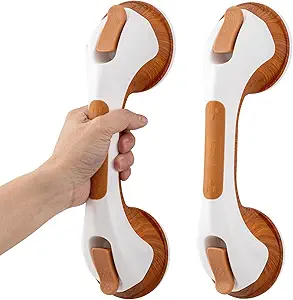
This is the more compact sibling in TAILI’s suction lineup, built around the same core mechanism — two strong suction cups with locking latches that click into place in about five seconds. It carries over the anti-slip top strip and the wave-contoured underside from the larger model, so grip quality doesn’t take a hit despite the smaller footprint. The 12-inch length makes it a good fit for tighter shower stalls, corner installations, or as a secondary bar positioned near a shower bench or shampoo shelf where a full-length bar wouldn’t fit.
Like the rest of the TAILI suction line, it’s marketed as a general-purpose aid for anyone who needs help balancing — seniors, pregnant women, people recovering from injury, or households with young kids learning to stand in the tub. Buyers often pick this one up as a second or third bar to complement a longer permanent rail elsewhere in the same bathroom, using it specifically at the point where a person first steps into the tub or shower rather than as their only support.
Installation and removal are identical to TAILI’s other suction bars: clean the wall, press for the recommended time, lock the latches, and it’s ready to use; releasing the latches lets you reposition or remove it entirely without leaving marks, which makes it easy to experiment with two or three placements before settling on the one that actually gets used.
Pros
- Same fast, tool-free suction-and-lock installation as TAILI’s larger bar
- Compact 12″ size fits corners, tight stalls, and secondary mounting spots
- Leaves no residue or damage when removed, making it renter-friendly
- Anti-slip strip and contoured grip carried over from the full-size model
- Affordable way to add a second handhold without a full installation project
Cons
- Same airtight, non-porous surface requirement as all suction-based bars
- 12″ length limits reach and may feel short for taller users or two-handed grips
- Not a substitute for a stud-mounted bar if full body-weight support is needed
- Suction strength can degrade with soap film buildup and needs periodic cleaning/re-testing
- Best used as a secondary bar rather than a household’s only point of support
3. Grab Bars for Shower, 2 Pack 16-Inch Anti-Slip Stainless Steel Handles (Polished Nickel)
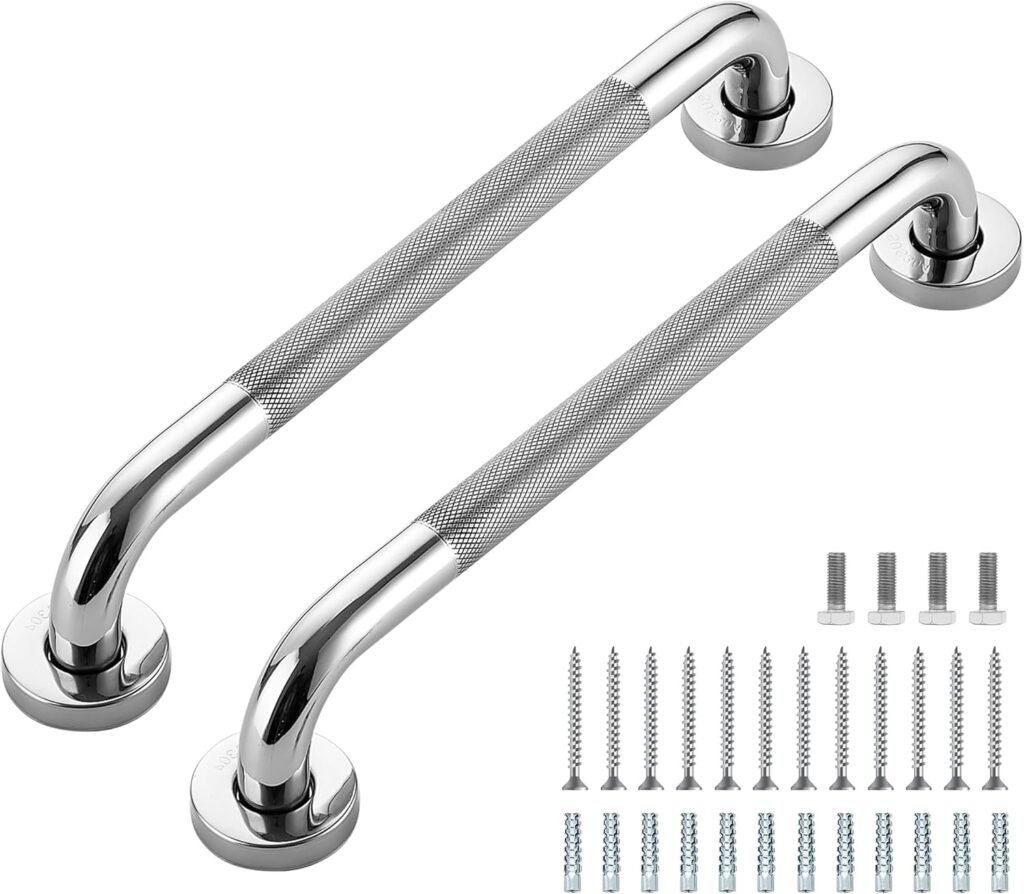
This is the article’s first fully permanent, stud-mounted option, and it’s aimed at buyers who want a bar that doesn’t depend on wall surface or suction integrity at all. It’s made from solid stainless steel with a 1-inch diameter that comfortably fits most hand sizes, and the surface is finished with a knurled, textured grip specifically designed to perform when hands are wet or soapy — a meaningful upgrade over smooth-finish bars in a room that’s almost always damp.
Because it’s sold in seven different lengths (12″, 16″, 18″, 20″, 24″, 32″, and 36″), it’s easy to buy a matching set for multiple spots in the same bathroom — one shorter bar by the toilet, a longer one along the tub wall — without mixing finishes or brands, which also keeps the room looking coordinated rather than like a mismatched retrofit.
Stainless steel construction also means it resists rust and corrosion far better than painted or coated metal alternatives, so it holds up over years of shower steam and cleaning products without pitting or discoloring. Beyond its core safety use, the wall-mounted rail doubles as a spot to hang towels or robes, which is a nice bonus in smaller bathrooms with limited storage, and it’s a practical choice for anyone planning a bathroom remodel from scratch rather than retrofitting an existing space.
Pros
- Solid stainless steel resists rust and corrosion far better than suction or coated alternatives
- Knurled non-slip surface specifically designed for wet, soapy grip conditions
- Available in seven lengths, making it easy to standardize hardware across a whole bathroom
- High load-bearing capacity appropriate for real, daily weight-bearing use
- Doubles as a towel or robe rail when not being used for support
Cons
- Requires drilling into wall studs (or suitable anchors) for full rated strength
- Installation takes longer and is less beginner-friendly than a suction-cup bar
- Leaves permanent holes if removed later, which matters for renters
- Polished nickel finish shows water spots more than a brushed or matte finish
- Buying multiple lengths for a full bathroom set raises the total cost compared to a single suction bar
4. Moen Home Care 8724, 24-Inch Stainless Steel Grab Bar
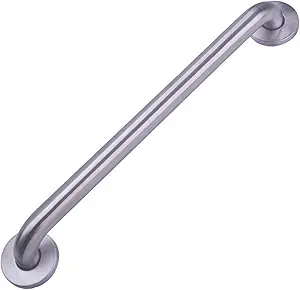
Moen is one of the most recognized names in bathroom hardware, and this Home Care line bar is built to match the trust that comes with the brand. It’s a 24-inch, 1.25-inch diameter stainless steel bar rated to support up to 500 lbs when it’s anchored into a wall stud, or when installed using Moen’s SecureMount system (sold separately) on walls where studs aren’t conveniently placed.
The stainless finish is intentionally understated — a lightly brushed, warm gray metallic look designed to coordinate with other Moen bathroom fixtures and accessories rather than standing out as obviously “medical” hardware, which matters to buyers who want safety features that blend into the room’s design rather than making the bathroom look like a hospital ward.
It meets ADA specifications, so it’s a straightforward choice if you’re renovating a bathroom to a formal accessibility standard or simply want documented compliance for insurance, inspection, or resale purposes. Moen backs it with a limited lifetime warranty, which is a meaningful signal of confidence from a company that’s been making bathroom fixtures for decades — this is the kind of bar you buy once and expect to still be solid fifteen years from now. It’s also widely stocked and easy to find replacement parts or matching accessories for, which isn’t always true of smaller, lesser-known brands in this space.
Pros
- 500 lb weight capacity when properly anchored — among the strongest options here
- ADA compliant, useful for formal accessibility renovations
- Concealed screw design gives a clean, finished appearance
- Brushed stainless finish coordinates with other Moen bathroom hardware
- Backed by Moen’s limited lifetime warranty, a strong long-term confidence signal
Cons
- SecureMount anchors are sold separately if you’re not mounting directly into a stud
- Permanent installation only — no suction or removable option
- Higher price point than most suction-based alternatives
- Installation is best done with basic tools and some DIY comfort, or a handyman
- 24″ length may require a second bar for very wide tubs or shower
5. LEVERLOC Grab Bars for Shower, 2 Pack Suction Bathtub Safety Rails
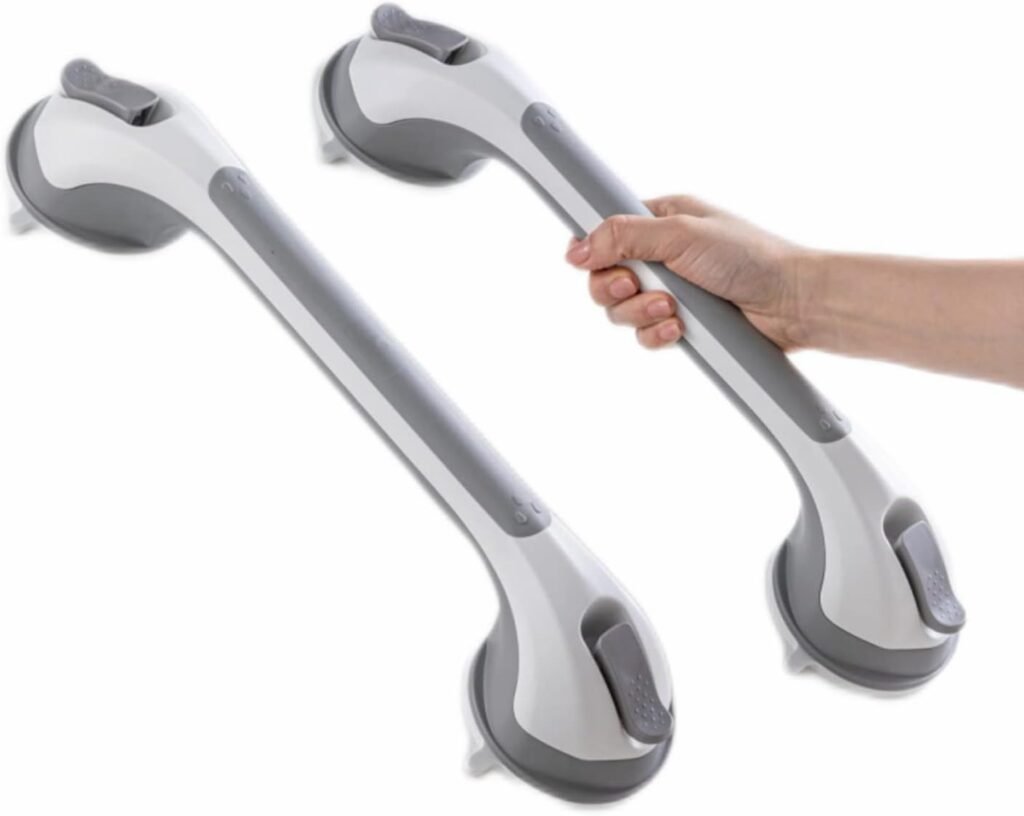
LEVERLOC’s suction bar stands out for how directly it communicates its own limitations — the listing explicitly states the bar is meant only as a balance assistance tool and should not be used to support full body weight, which is exactly the kind of honesty every suction-based product should lead with. Each bar measures 12.2 inches and mounts using the now-familiar no-drill process: clean the wall, press the suction cup for five seconds, then snap the latches down to lock it in place.
LEVERLOC recommends pressing the suction cup for the full five seconds before locking the latches, rather than locking first, which the company notes gives a stronger hold, and it’s a small sequencing detail that a lot of first-time buyers get wrong with other suction bars. The bar is elongated enough that it’s designed to accommodate both hands at once, which is useful for anyone who needs a firmer two-handed grip while transitioning in or out of a tub, or for a caregiver helping steady someone during that same movement.
Like the rest of the suction category, it’s strictly limited to airtight, non-porous, smooth surfaces larger than 4×4 inches — tile, glass, marble, or stainless steel — and will not adhere to textured or painted walls, so it’s worth checking your specific tile or shower surround before ordering.
Pros
- Upfront, honest labeling that it’s for balance assistance, not full-weight support
- Elongated grip length accommodates two-handed holds
- No drilling, glue, or tools — quick installation and easy removal for cleaning
- Reusable and repositionable if your first placement isn’t ideal
- Clear manufacturer troubleshooting guidance if suction doesn’t hold initially
Cons
- Still requires an airtight, non-porous surface larger than 4×4 inches to work at all
- Not appropriate as a primary handrail for someone who needs to bear significant weight
- Suction needs to be re-pressed and re-checked periodically, especially in humid bathrooms
- 12.2″ length is on the shorter side compared to permanent bar options
- Correct suction technique (pressing before locking) takes a little practice to get consistently right
6. Safe-er-Grip Suction Cup Grab Bars for Bathtubs & Showers, 16 Inches
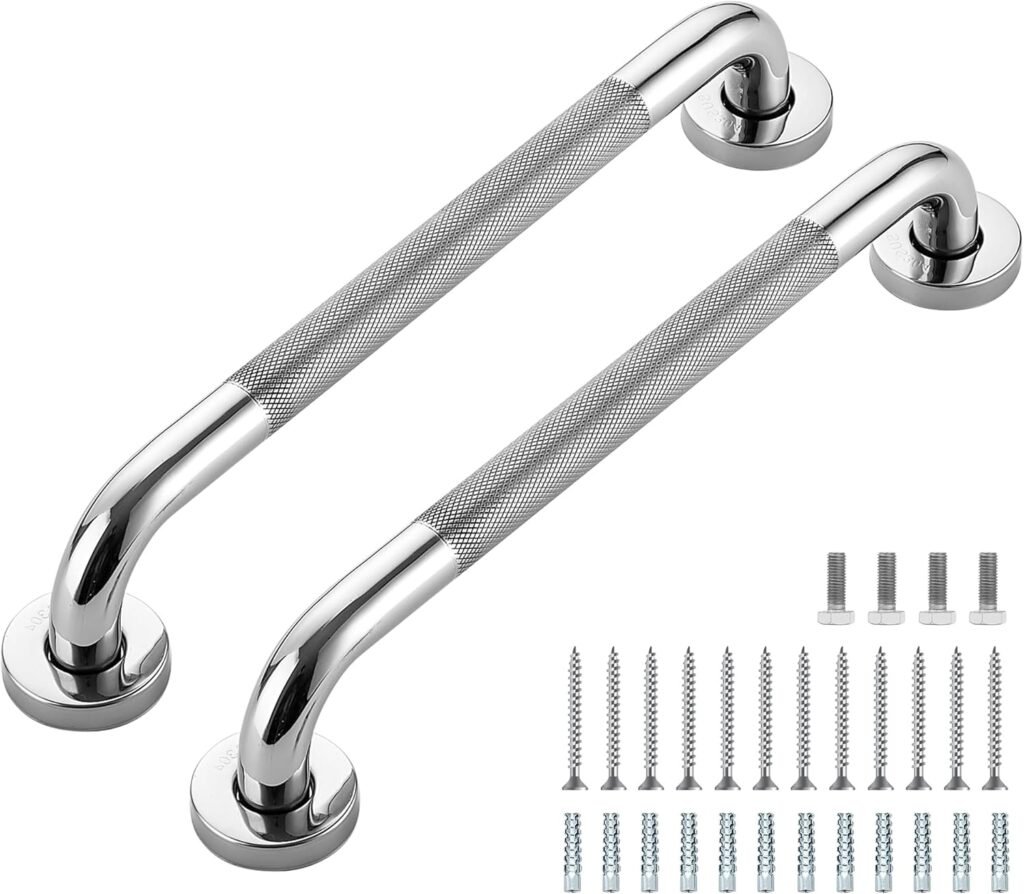
Safe-er-Grip, made by Changing Lifestyles, is one of the more established names specifically in the no-drill suction grab bar category, and it’s built with that reputation in mind — a straightforward 16-inch bar in a white-and-grey finish designed to blend into most bathroom color schemes rather than looking like an obvious medical add-on. Because it doesn’t require any tools, screws, or wall damage, it’s a frequent pick for people who rent their home, travel often and want a portable safety bar for hotel bathrooms, or simply want to trial a grab bar in a specific spot before committing to a permanent installation. It’s also a common recommendation from occupational therapists and home-care aides specifically because it can go in and out of a bag, making it practical for anyone who splits time between two homes or is helping a family member who moves between care settings. The suction mechanism works the same way as other bars in this category: it needs a smooth, sealed, non-porous surface to create a genuine vacuum, and it should be periodically pressed and re-tested since soap film, hard water deposits, and humidity can all gradually weaken suction over time. It’s best thought of as a flexible, go-anywhere safety aid rather than the anchor point for someone who needs to lean their full weight on a bar every day.
Pros
- One of the more established, recognizable brands in the no-drill suction category
- Genuinely portable — good for travel, rentals, and testing placement before a permanent install
- Neutral white-and-grey finish blends into most bathroom color schemes
- No tools or wall damage, easy to relocate or remove entirely
- Straightforward installation process similar to other suction bars on this list
Cons
- Same non-porous, airtight surface requirement as every suction-based bar
- Suction needs regular re-testing, especially in high-humidity or hard-water bathrooms
- Not designed to bear significant sustained body weight
- 16″ length is on the shorter side if you want a bar to span a wider reach
- Portability means it can also be accidentally moved or removed by someone unfamiliar with the latch system
Suction vs. Permanent: Which Should You Actually Buy?
If you’re outfitting a bathroom for daily, long-term use by someone with real mobility limitations, a stud-mounted steel bar is the safer default — it doesn’t depend on wall surface, humidity, or suction wearing out over time. Suction bars earn their place in rentals, hotel rooms, RVs, or as a secondary, light-duty handhold, but only on the smooth, non-porous surfaces they’re built for, and only as a balance aid rather than something to hang full body weight on.
Installation Tips
- For permanent bars, locate wall studs with a stud finder and mount into at least two studs where possible; use the manufacturer’s specified anchors if studs don’t align with the bar’s screw holes.
- For suction bars, clean the wall surface thoroughly, press firmly for the full recommended time before locking the latch, and re-test suction weekly, especially in high-humidity bathrooms.
- Mount height and placement should support the specific motion you need help with — standing from a tub, entering a shower, or getting up from a toilet — rather than a single default height.
Frequently Asked Questions
Do suction grab bars actually work? Yes, but only on smooth, airtight, non-porous surfaces like glass, glazed tile, or acrylic, and only as a light-duty balance aid — not for supporting full body weight.
What weight can a grab bar hold? It varies by product and mounting method. Stud-mounted steel bars commonly support 300–500 lbs, while suction bars are usually rated lower and depend heavily on surface condition.
Where should a grab bar be installed in a bathroom? Common spots include inside the tub or shower wall, beside the toilet, and at the shower entrance — wherever a person needs support standing, sitting, or stepping over an edge.
Are grab bars covered by insurance or Medicare? Coverage varies; some home modification and durable medical equipment programs may help, so it’s worth checking with your insurer or a local Area Agency on Aging.
Do suction grab bars actually work?
Yes, but only on smooth, airtight, non-porous surfaces like glass, glazed tile, or acrylic, and only as a light-duty balance aid — not for supporting full body weight.
Final Thoughts
A grab bar is a small purchase that can meaningfully lower fall risk in one of the most dangerous rooms in the house. Match the mounting type to your wall and your needs — permanent for daily reliance, suction for light-duty or rental use — and you’ll get a bar that actually holds when it matters.
For more home safety guidance, see our senior fall prevention checklist, our guide to non-slip shower mats, and our comparison of shower chairs for elderly users. If mobility around the house is a concern beyond the bathroom, our walking cane buying guide and non-slip slippers roundup are good next reads. You may also want our full home safety checklist, raised toilet seat reviews, bathtub transfer bench guide, best bath mats for elderly users, and our full library of elderly care product guides.
Sources and further reading: National Institute on Aging — Falls and Fractures, CDC STEADI Older Adult Fall Prevention, ADA 2010 Design Standards, CPSC Older Adult Safety, NIA — Aging in Place, Mayo Clinic — Fall Prevention, National Council on Aging — Preventing Falls at Home, NIH Research Matters, U.S. Department of Health & Human Services — Aging, and AARP Home Safety Resources.