
Disclosure: This post contains Amazon affiliate links. As an Amazon Associate, we earn from qualifying purchases at no extra cost to you. We only recommend products we’ve researched thoroughly.
A wet, slippery shower floor is one of the most common places for a fall to happen at home, and for older adults, a single fall can mean months of recovery or worse. The CDC reports that falls are the leading cause of injury among people 65 and older, and the bathroom is consistently one of the highest-risk rooms in the house.
The good news is that one of the cheapest, fastest fixes is also one of the most effective: a properly rated grab bar for showers. Whether you’re shopping for an aging parent, recovering from surgery, or simply want extra peace of mind in a slick tub, this guide walks through exactly what to look for, compares six popular Amazon options side by side, and answers the questions people ask most before buying.
Table of Contents
Why a Shower Grab Bar Matters More Than You Think
Most people don’t think about bathroom safety until after a scare. A wet foot on a wet tile, a moment of dizziness while standing up, or simply the fatigue of standing for a five-minute shower — any of these can end in a fall. A grab bar gives you (or the person you’re shopping for) a fixed point of contact to steady against, which is especially important for seniors, pregnant women, post-surgery patients, and anyone with limited mobility or balance issues.
According to the National Institute on Aging, installing grab bars near the toilet and in the tub or shower is one of the top recommended home modifications for fall prevention. It’s a small investment that can prevent a genuinely life-altering injury.
Suction Grab Bars vs. Screw-Mounted Grab Bars: Which Should You Buy?
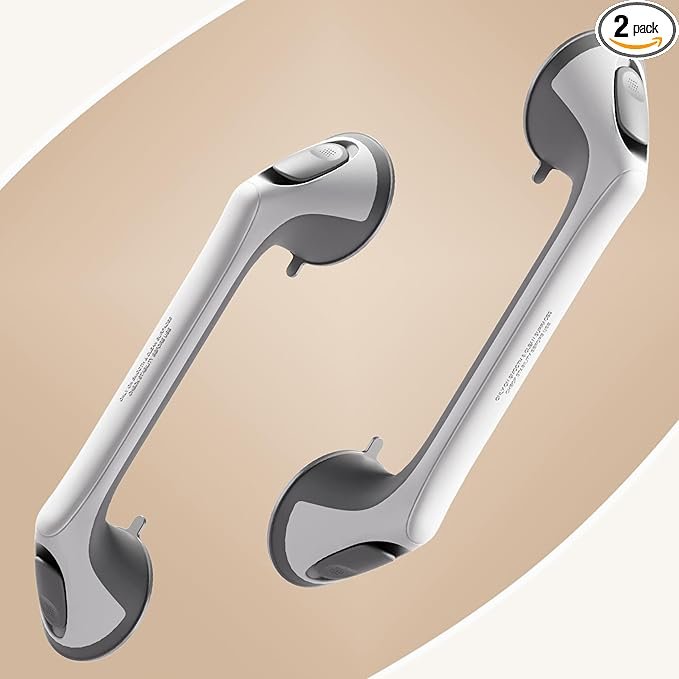
Before comparing products, it helps to understand the two main categories you’ll see on Amazon, because they’re built for very different situations.
Suction Cup Grab Bars
These attach with vacuum-locking suction cups — no drilling, no tools, no wall damage. They’re ideal for renters, hotel stays, travel trailers, or anyone who wants a bar up in five minutes without calling a handyman. The trade-off is that they only work on smooth, non-porous, airtight surfaces like glass, tile, marble, or acrylic. They will not hold on textured tile, wallpaper, drywall, or painted walls, and every manufacturer is clear that suction bars are for balance assistance only, not for bearing your full body weight.
Screw-Mounted (Stainless Steel) Grab Bars
These bolt directly into wall studs or use anchors, offering a permanent, load-bearing connection that can support significantly more weight. They’re the better choice for anyone with serious mobility limitations, higher body weight, or a long-term need for support. The trade-off is installation time and, in rental properties, the fact that you’ll be drilling into the wall.
Quick tip: If you or a loved one needs a bar that can safely take a real weight-bearing lean — not just a light touch for balance — a permanently screwed-in stainless steel bar is the safer long-term choice. Suction bars are excellent for extra grip and peace of mind but should always be treated as a supplement, not a replacement, for a stud-mounted bar in high-risk situations.
What to Look for Before You Buy
- Weight capacity: Check the manufacturer’s rated pulling force or load capacity, and buy well above what you actually expect to need.
- Wall compatibility: Suction bars need smooth, non-porous tile of at least 4×4 inches. Textured, painted, or drywall surfaces need a screw-mounted bar instead.
- Grip texture: Look for an anti-slip or knurled surface so the bar stays secure even with wet, soapy hands.
- Material: Stainless steel resists rust and corrosion better than ABS plastic over years of daily shower exposure.
- Length: A 16-inch bar suits most standard showers and tubs, though longer bars (24 inches and up) give more coverage for wider stalls.
- Ease of cleaning/removal: Suction cups should be washable and reusable if you plan to reposition them.
For more detail on proper placement and bathroom accessibility standards, the ADA Standards for Accessible Design and National Association of Home Builders both publish useful reference guidance if you’re planning a full bathroom accessibility remodel rather than a quick add-on bar.
Quick Comparison Table
| Product | Mount Type | Material | Weight Rating | Length |
|---|---|---|---|---|
| 1. ABLECARE Suction Grab Bars | Suction cup | ABS + silicone | 250 lbs | 16 in |
| 2. Stainless Steel Screw-Mount Bars | Screw-mounted | Stainless steel | Up to 500 lbs pulling force | 16 in |
| 3. Suction Bars with Safety Indicator | Suction cup | ABS + silicone | 243 lbs | 16.7 in |
| 4. Polished Nickel Stainless Steel Bars | Screw-mounted | Stainless steel | High load-bearing (stud-mounted) | Multiple: 12″–36″ |
| 5. TAILI 12″ Suction Grab Bars | Suction cup | ABS + silicone | Balance assistance only | 12 in |
| 6. TAILI Heavy Duty Suction Grab Bars | Suction cup | ABS + silicone | 240 lbs each | 16 in |
The 6 Best Grab Bars for Showers, Reviewed
1. 2 Pack 16 Inch Grab Bars for Bathtubs and Showers (ABLECARE)
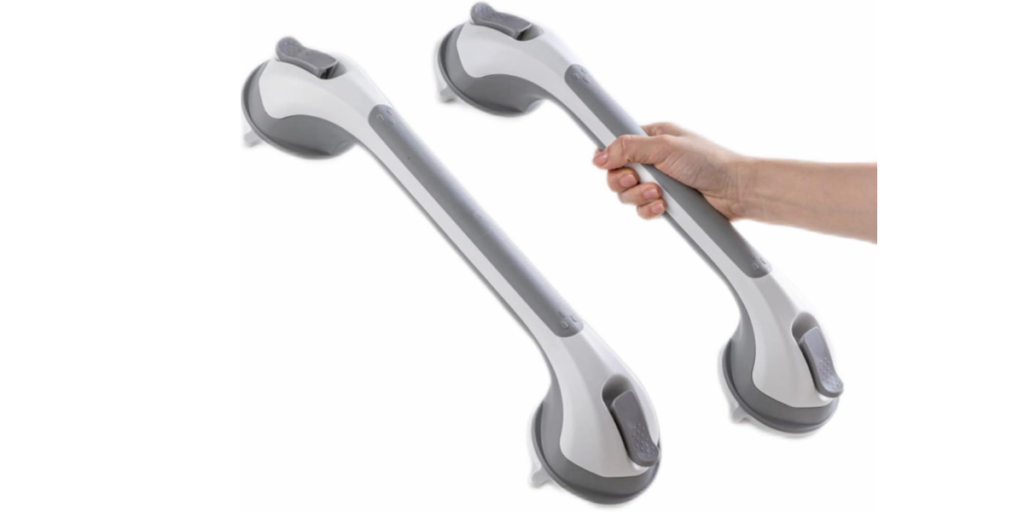
This ABLECARE set is one of the most beginner-friendly grab bars we looked at, and it’s a smart starting point for anyone who wants extra security in the shower without turning the project into a weekend of drilling and patching tile. Each bar uses vacuum-locking suction cup technology paired with a simple locking latch: you press the bar flat against the wall, flip the latches down, and the seal is set in a matter of seconds. There’s genuinely no drilling, no screws, no adhesive strips, and no tools involved, which makes it an easy first grab bar for anyone testing the waters — literally — before committing to a permanent installation.
The bar itself is molded from high-strength ABS plastic, and the manufacturer states it’s rigorously tested to hold up to 250 pounds when the suction is properly seated on a compatible surface. Along the top edge you’ll find a raised anti-slip strip that adds real friction under wet, soapy fingers, while the underside has a gently curved profile that’s comfortable to wrap a full hand around rather than just fingertips. Because the whole unit is fully waterproof and the suction cups are washable, you can pull it off the wall, rinse away soap scum or hard-water buildup, let it air dry, and pop it right back on with the same holding power. That reusability is a genuine advantage over cheaper suction bars that lose their grip permanently once dust or oil gets trapped under the cup.
Where this set really shines is flexibility of placement — because there’s no commitment involved, you can try a bar at shoulder height for one family member and reposition it lower for a child or wheelchair user later, all without leaving a single screw hole behind. That makes it a particularly good fit for rented apartments, assisted-living suites, or households where more than one person with different needs shares the same bathroom.
Pros
Cons
2. Grab Bars for Shower, Stainless Steel Shower Grab Bars (Screw-Mounted)
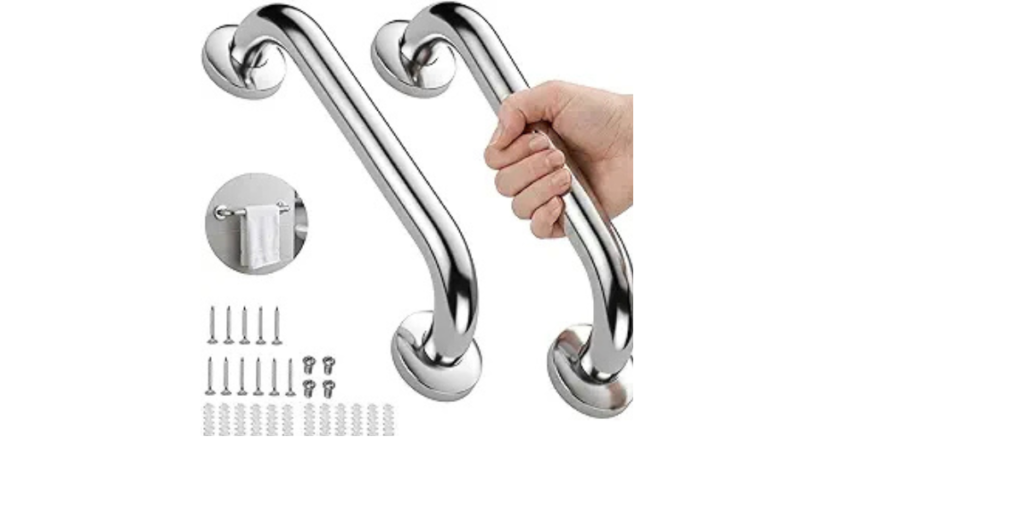
If you need a bar that can genuinely be leaned on with real, sustained body weight — not just tapped for balance — this stainless steel screw-mounted set is the strongest pick on this entire list. Rather than relying on suction, each bar is anchored directly into the wall using a concealed screw system, and the manufacturer rates it for up to 500 pounds of pulling force once properly installed into studs. That kind of margin matters for anyone recovering from hip or knee surgery, anyone with significant mobility limitations, or simply for households that want the peace of mind of a bar that will never lose its grip mid-shower.
The bar is machined from solid stainless steel, which is both waterproof and rustproof, so it holds up to years of daily exposure to steam, hot water, and shampoo runoff without the pitting or discoloration you sometimes see on cheaper chrome-plated bars. Rather than a smooth polished finish, the surface has a deliberately knurled, slightly textured grip pattern — this is a small but important design choice, because a mirror-smooth stainless bar can actually become dangerously slick the moment it’s wet, while the knurling keeps traction consistent even with soap-covered hands. The screws themselves mount through a concealed design, so once installed, you get a clean, professional-looking bar without visible hardware breaking up the line.
Installation does require more effort than a suction bar — you’ll want a stud finder, a drill, and the included anchors and screws, and the manufacturer supplies assembly instructions to help you get placement and angle right the first time. But that one-time investment in effort pays off with a bar that isn’t going anywhere, and one that’s versatile enough to use well beyond the shower: the same bar works along stairways, in the kitchen next to a step-up, or beside a bed for anyone who needs support getting up. If anything about the fit or finish doesn’t meet expectations, the manufacturer also states they’ll respond to any quality or installation questions within 24 hours.
Pros:
- Very high load capacity when mounted correctly
- Stainless steel resists rust long-term
- Concealed screw design keeps the finish clean
- Versatile — also works in hallways, stairs, or bedrooms
Cons:
- Requires drilling and proper stud location for full strength
- Not ideal for renters or temporary use
- Installation takes longer than a suction-cup bar
3. 16.7″ Shower Grab Bars with Safety Indicators (Suction)
This suction option stands out from the rest of the pack because of one clever feature: a built-in safety indicator that visually shows whether the suction seal is still holding, so you’re never left guessing whether the bar is truly secure before you put your weight on it. For a suction-based product, that’s a meaningful upgrade — most suction bars give you no feedback at all until the moment they fail, so being able to glance at an indicator before stepping into the shower adds a real layer of reassurance, especially for elderly users living alone.
Each of the two included suction cups uses an upgraded, thickened adhesive design engineered specifically to block air from slowly seeping back in underneath the cup, which is the main reason ordinary suction cups gradually lose their grip over days or weeks. That extra sealing means this bar tends to hold its suction longer between rechecks than a basic single-layer cup. Like the other suction bars on this list, it’s strictly intended for smooth, non-porous, airtight surfaces of at least 4×4 inches — think glass, glazed tile, marble, or acrylic — and it is explicitly not designed to support your full body weight, only to provide auxiliary balance assistance.
On the design side, the bar itself measures a slightly longer 16.7 inches, giving a touch more hand-positioning room than the standard 16-inch bars on this list, and it includes the same anti-slip top strip and curved wave grip shape found across most of these suction models to reduce wrist strain during use. It’s rated to withstand a maximum pulling force of 243 pounds (110 kg), and it’s marketed specifically toward multi-purpose use — installed near the toilet for standing assistance, by the kitchen counter for those with limited mobility, or in the shower itself — making it a flexible, family-friendly pick if you want one style of bar throughout the home.
Pros:
- Built-in indicator gives a visual suction-seal check
- No-drill, tool-free installation
- Curved wave design reduces wrist strain
- Waterproof and rust-proof
Cons:
- Rated slightly lower at 243 lbs pulling force
- Same surface limitations as all suction bars
- Still intended for balance support, not full body weigh
Polished Nickel Stainless Steel Grab Bars (Multiple Lengths)
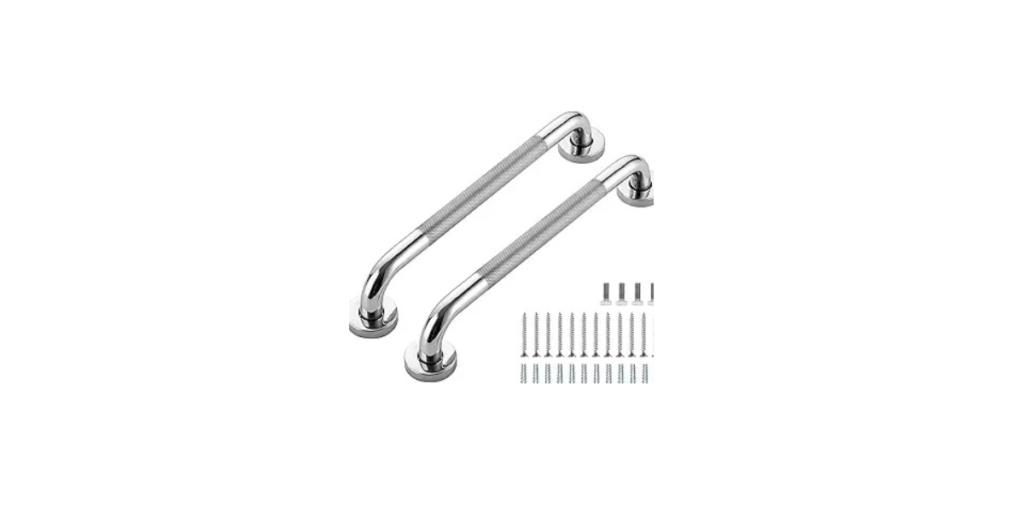
This is by far the most flexible option on this list if your goal is to outfit an entire bathroom, not just a single shower wall. Rather than being locked into one fixed size, it’s available in seven different lengths — 12, 16, 18, 20, 24, 32, and 36 inches — which means you can size a shorter bar for a tight tub corner, a medium bar for the main shower wall, and a long bar running the full length of a walk-in shower, all from the exact same product line and finish. That consistency matters more than people expect; mixing and matching grab bars from different brands often means mismatched finishes and grip textures scattered around one bathroom, while this option lets everything look intentional and cohesive.
Constructed from solid stainless steel with a polished nickel finish and a 1-inch bar diameter, it’s built to fit comfortably in essentially any adult hand size, and the material is fully rust-resistant, so it won’t degrade or discolor even with years of daily hot-shower exposure. The surface uses the same style of non-slip knurled texture found on other quality stainless bars in this guide, specifically chosen because a mirror-polished stainless surface loses traction fast the moment it gets wet — the knurling keeps grip consistent whether hands are dry, damp, or fully soapy.
Because this is a permanent, screw-mounted bar, installation is more involved than a suction option: it needs to be anchored at any chosen angle using the included fixings, and for maximum load-bearing strength, screws should land in wall studs rather than tile or drywall alone. In exchange for that extra setup time, you get a bar with genuinely high load capacity and zero risk of suction failure — and outside the shower, the same bar doubles nicely as a sturdy towel or robe rail in a dry hallway or bedroom, giving it a second life beyond pure accessibility use.
Pros
Cons
Our Buying Advice: Which One Should You Choose?
If you’re renting, traveling, or just want a fast, damage-free upgrade for a tiled shower, one of the suction options (#1, #3, #5, or #6) is the practical choice — just double check your tile is smooth and at least 4×4 inches before ordering. If you or your loved one needs a bar rated for real weight-bearing support, or you’re setting up a bathroom for long-term accessibility, go with a stainless steel screw-mounted bar (#2 or #4) and have it anchored into wall studs.
Many households actually use a combination: a permanent screw-mounted bar as the primary support, plus a suction bar as a secondary grip point near the shampoo shelf or shower entrance.
Installation and Safety Tips
- Always clean the wall surface thoroughly with rubbing alcohol before applying a suction cup — oil and soap residue is the number one cause of suction failure.
- For screw-mounted bars, use a stud finder and the manufacturer’s included anchors; drywall alone will not hold a load-bearing bar.
- Test suction bars weekly by giving them a firm tug before each use, especially for elderly users.
- Position bars at a height and angle that matches the user’s actual reach — a bar installed too high or too low won’t get used.
- Consider pairing a grab bar with a non-slip bath mat for a more complete fall-prevention setup.
The U.S. Consumer Product Safety Commission and InterNACHI both publish general guidance on bathroom safety hardware installation if you want a deeper technical reference before you drill.
Frequently Asked Questions
Are suction grab bars actually safe?
Yes, when used as intended. Suction grab bars are designed for balance assistance, not for supporting someone’s full body weight. On the correct surface (smooth, non-porous tile, glass, or acrylic), they provide reliable extra grip, but they should not be relied on the way a stud-mounted bar is for someone who needs to lean their full weight for support.
Do grab bars work on all shower tiles?
No. Suction-mounted bars only work on smooth, non-porous, airtight surfaces measuring at least 4×4 inches, such as glass, marble, or glazed tile. Textured tile, wallpaper, drywall, and painted walls will not hold suction reliably — a screw-mounted bar is the better option for those surfaces.
What weight capacity should I look for in a shower grab bar?
For balance-support suction bars, look for a rating of at least 200–250 lbs, which covers most users comfortably. For anyone who needs to bear real weight while standing or transferring, choose a screw-mounted stainless steel bar rated for higher pulling force, properly installed into wall studs.
How high should a shower grab bar be installed?
General accessibility guidance places grab bars around 33 to 36 inches above the shower floor, though the right height ultimately depends on the specific user’s height and reach. For toilet-area or tub bars, refer to ADA design standards for more precise measurements.
Can I use a suction grab bar and a screw-mounted bar together?
Absolutely, and many households do exactly that. A permanent screw-mounted bar provides the main point of support, while a suction bar adds a secondary grip point elsewhere in the shower for extra convenience and confidence.
Final Thoughts
A shower grab bar is one of the smallest purchases you can make with an outsized impact on someone’s safety and independence. Whether you go with a no-drill suction bar for a quick, renter-friendly upgrade or a permanent stainless steel bar for serious weight-bearing support, the most important thing is simply getting one installed correctly on the right surface. Check out the options above, match the mount type to your bathroom, and take one more fall risk off the table today.
Related reading: Bathroom Safety Checklist for Seniors | Best Shower Chairs and Benches | Best Non-Slip Bath Mats | Walk-In Tub Buying Guide | Home Modifications for Fall Prevention